

Empowering Research with Openness and Transparency: A Successful Open Science Workshop

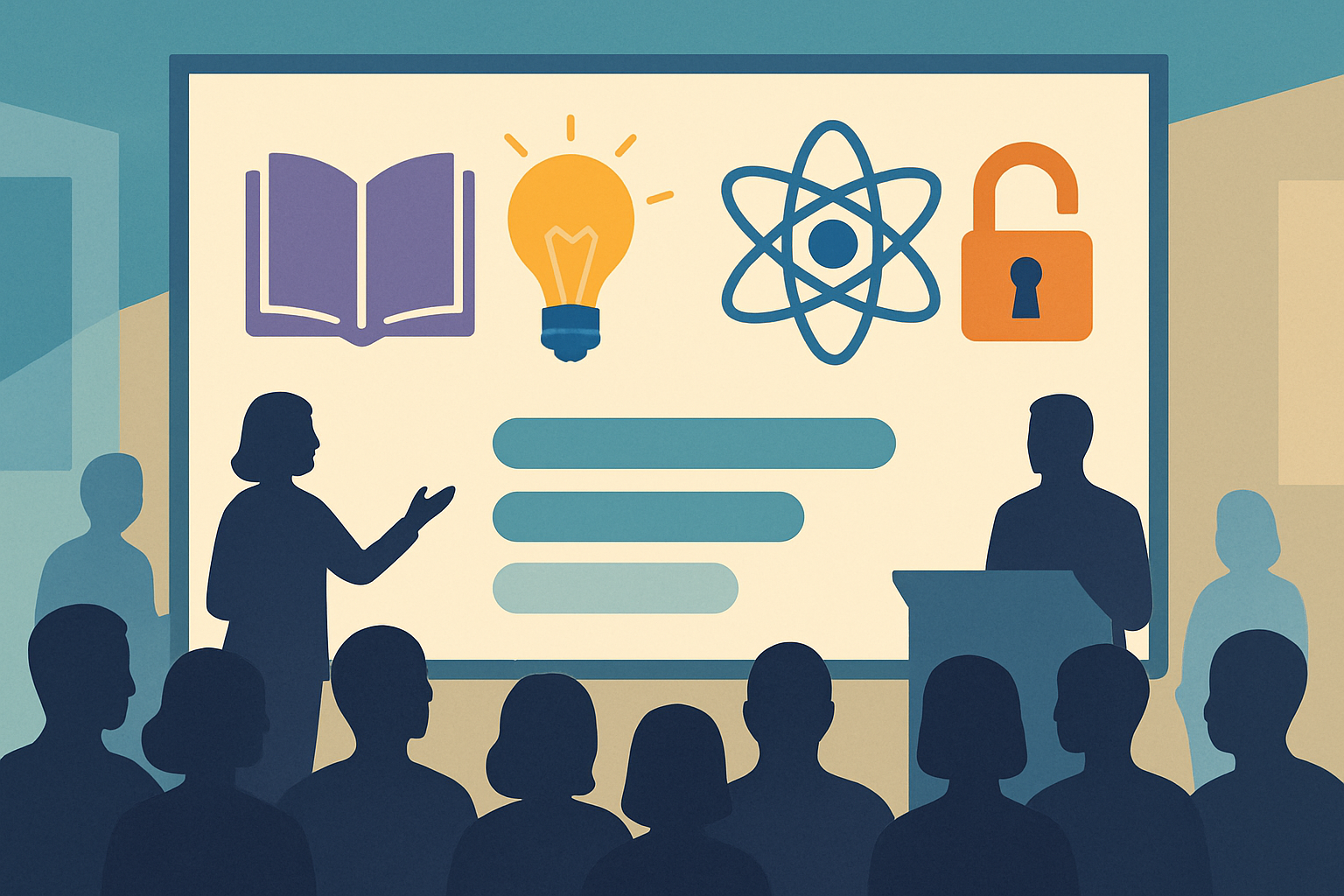
On September 11th, 2025, the PANERIS project hosted its highly anticipated online workshop – Empower Your Research with Openness and Transparency. The event brought together researchers, graduate students, and academic professionals from across Europe and the US for a day of knowledge exchange focused on Open Science practices and principles.
The workshop was a great success, sparking insightful discussions and offering practical guidance on how to integrate openness, transparency, and reproducibility into research workflows.
The event featured seven invited speakers — each leading voices in the Open Science movement — who covered a wide range of topics, from research assessment reform and FAIR data publication to preprints, outreach, and incentives for reproducible science.
Highlights from the Workshop
The day opened with a compelling talk by Dr. Heidi Seibold (Digital Research Academy, Germany), who explored how Open Science initiatives can improve their visibility and impact through strategic outreach and communication.
Next, Dr. Tracey Weissgerber (University of Coimbra, Portugal) presented two transformative institutional programs — EXCELScIOR and TREASURE — that reward and support graduate students for implementing open and reproducible practices in their thesis work.
Prof. Dr. Thed van Leeuwen (Leiden University, Netherlands) followed with a rich historical overview of how Open Science policies and recognition practices have evolved in the Netherlands over the last 15 years. His presentation offered concrete examples of how different institutions, including Leiden University and CWTS, have adapted to the changing research landscape.
In the second half of the program, Dr. Anton Bespalov (Partnership for Assessment and Accreditation of Scientific Practice, Germany) shared reflections on assessing research quality through traceable experimental records, while Prof. Dr. Björn Brembs (University of Regensburg, Germany) demonstrated a script-based workflow for publishing fully linked and automated FAIR data packages.
Dr. Samantha Hindle (openRxiv, USA) brought attention to the power of preprints in accelerating the dissemination of scientific findings and highlighted how platforms like bioRxiv and medRxiv are reshaping scholarly communication.
The workshop concluded with Dr. David Mellor (Center for Open Science, USA), who provided a practical overview of Registered Reports — a format that encourages methodological rigor and reduces publication bias by conducting peer review before data collection.
Watch the Presentations
If you missed the event or would like to revisit the talks, video recordings of all presentations are now available:
- Dr. Heidi Seibold – Your Open Science initiative deserves to be seen
- Dr. Tracey Weissgerber – Building Better Research: From Meta-Science to Graduate Incentives for Openness and Reproducibility
- Prof. Dr. Thed van Leeuwen – Developments on Open Science in the Netherlands over the last 10-15 years
- Dr. Anton Bespalov – Assessing quality of research practice: Traceable and transparent experimental records
- Prof. Dr. Björn Brembs – Automating linked open data publication
- Dr. Samantha Hindle – Preprints: communicating at the speed of science
- Dr. David Mellor – Preregistering research to improve rigor and transparency
A Meaningful Step Forward
The workshop was more than a lecture series — it was a collaborative platform for promoting systemic change in how research is conducted, evaluated, and shared. Participants left with a clearer understanding of the tools, practices, and incentives that support a more open and trustworthy research culture.
For those who could not attend or would like to revisit the presentations, we invite you to explore the materials linked above.
Acknowledgments
The Empower Your Research with Openness and Transparency workshop was organized by the Vilnius University Life Sciences Center as part of the PANERIS project. It was supported by funding from the European Commission’s Horizon Europe program.

The opinions and views expressed are solely those of their author(s) and do not necessarily reflect those of the European Union or of the European Research Executive Agency (REA). Neither the European Union nor the REA can be held responsible for them.


